
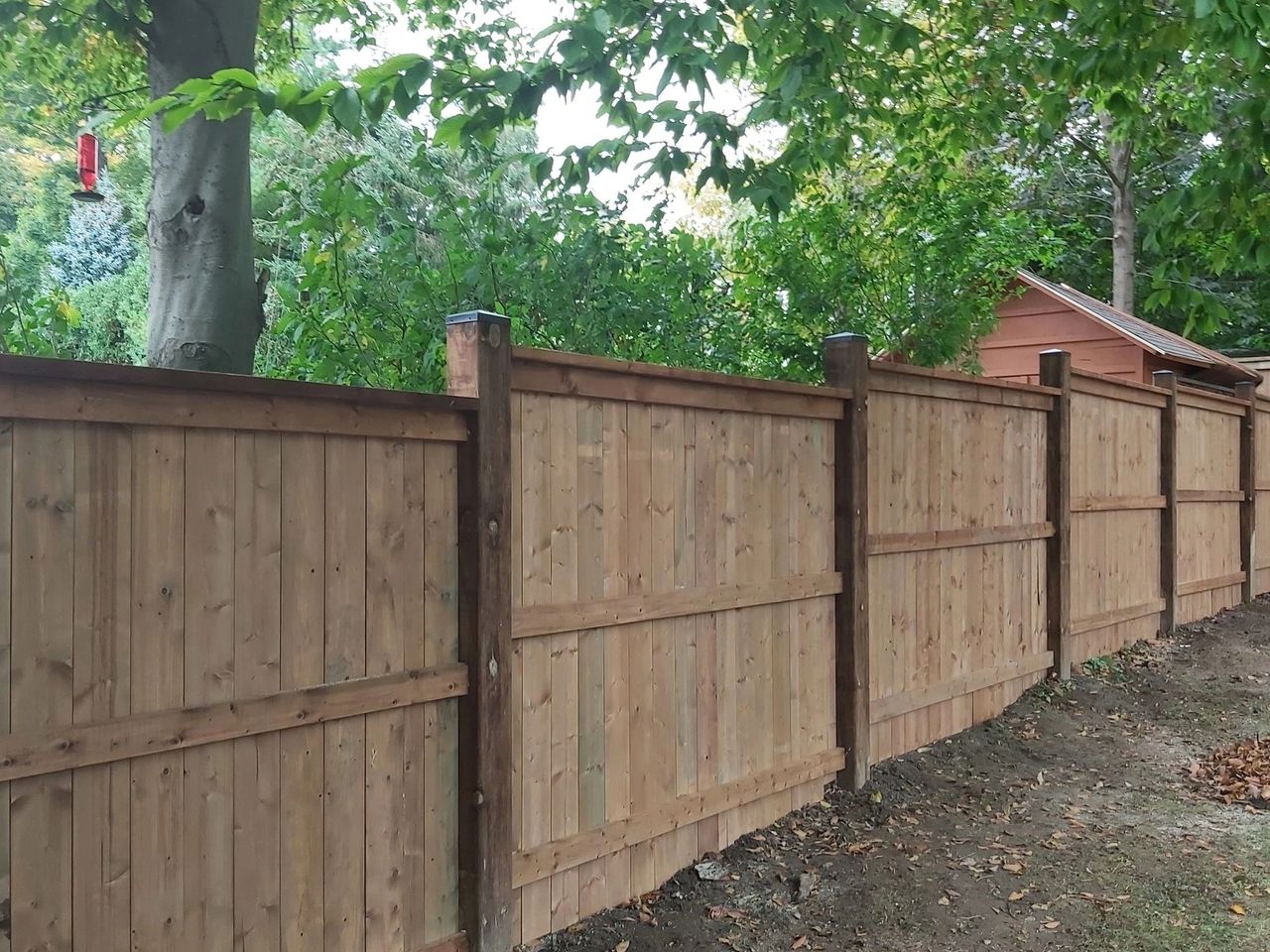
Fencing Guide - London, Ontario
Understanding Fencing Boundaries in London, Ontario
Everything London homeowners need to know about property lines, setback rules, neighbour agreements, and City of London fence bylaws before installing a fence.
01 - The Basics
What Are Property Line Fences?
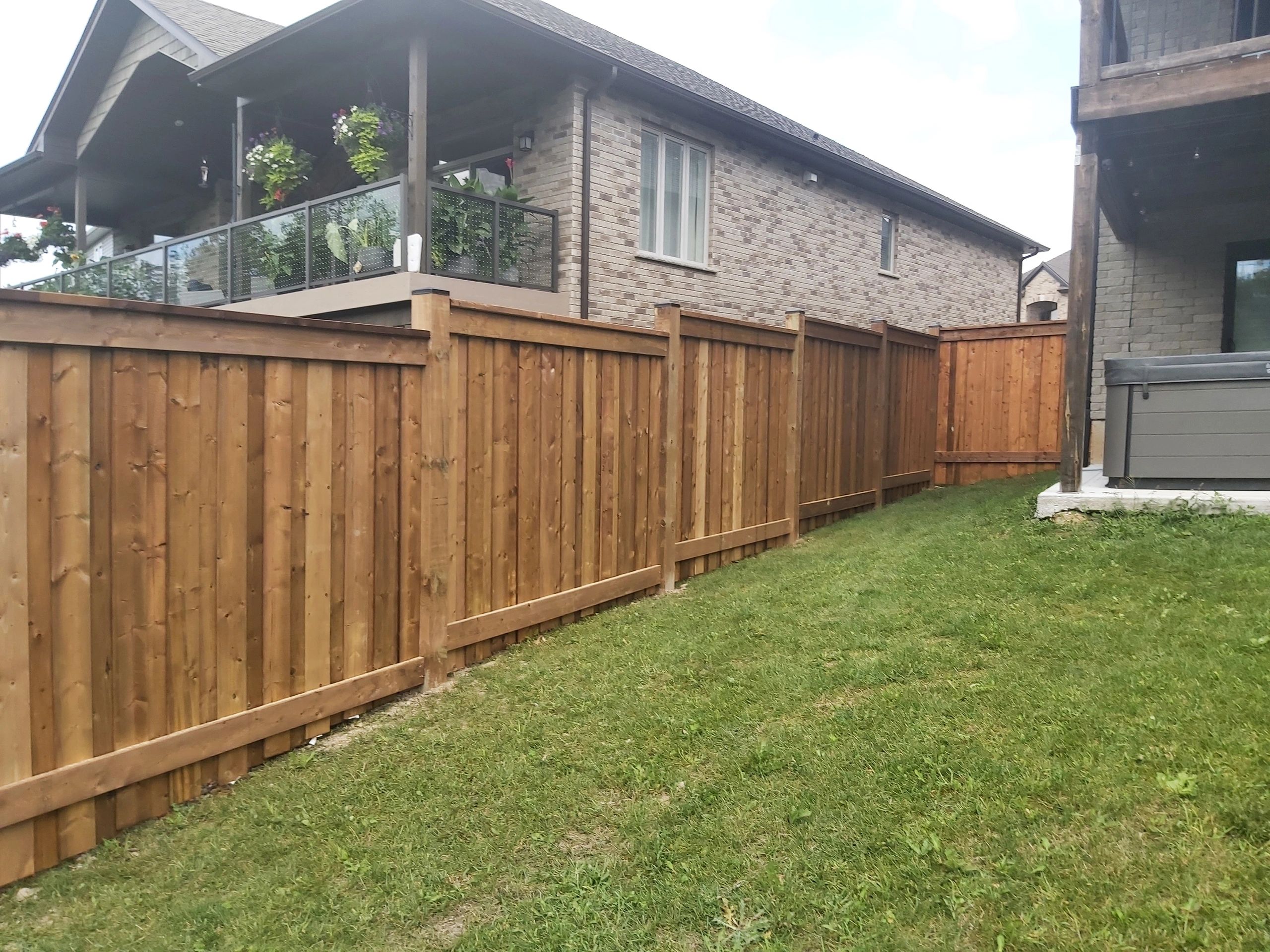
A property line fence is a fence built at or near the legal boundary that separates two parcels of land. Going right alongside security, a fence is likewise an extraordinary method to set up fencing boundaries and property lines between neighbours.
Sometimes individuals trespass inadvertently, not realizing they are upsetting the property owner. Other homeowners may be frustrated that their neighbours are not respecting the line that separates their properties. In circumstances like this, a fence creates a clear, hard-and-fast boundary.
Before any fence goes in the ground, however, you need to understand exactly where your property ends and your neighbour's begins. Getting this wrong can lead to costly disputes, forced removals, and damaged relationships.
02 - Local Rules
Fence Setback Requirements in London, Ontario
The City of London regulates how close a fence can be built to the property line. These setback rules vary by yard location and zoning designation.
- Front Yard: Fences in the front yard are generally limited to 1 metre (3.3 feet) in height and must respect the sight-triangle setback near driveways.
- Side and Rear Yards: Fences up to 2 metres (6.5 feet) are typically permitted at or near the side and rear property lines in residential zones.
- Corner Lots: Corner lots have stricter rules to maintain sightlines for drivers. Always check the specific bylaw for your lot configuration.
- Permit Requirements: Most residential fences do not require a permit, but fences over 2 metres or in special zones may need City of London approval.
Pro tip: Always verify the current bylaw with the City of London before starting your project. Bylaws can change, and your specific zoning may have additional requirements.
04 - City of London
City of London Fence Bylaws Overview
The City of London regulates fences through its Zoning Bylaw Z.-1 and the Property Standards Bylaw. Here are the key rules every homeowner should know.
Maximum Height - Front Yard
Applies to fences in the required front yard setback area.
Maximum Height - Side/Rear Yard
Standard residential zones. Some zones may differ.
Sight Triangle
Clear zone required at driveways and intersections for safety.
Prohibited Materials
Not permitted in residential zones.
Maintenance
Fences must be kept in good repair. Leaning or deteriorating fences can result in a bylaw notice.
These figures are for reference only. Always confirm current requirements with the City of London before installation. Bylaws are subject to change.
05 - Before You Build
How to Determine Your Property Boundaries
Never assume where your property ends. Incorrect placement can force you to remove and rebuild a fence at your own expense.
- 01
Review your property survey
Your original survey document (received at closing) shows exact dimensions and boundary locations.
- 02
Locate survey pins
Iron bars or pins are typically driven into the ground at lot corners. Use a metal detector if needed.
- 03
Check GIS mapping tools
The City of London offers online mapping that can help you approximate lot lines, though it is not legally binding.
- 04
Hire a land surveyor
For certainty, commission a registered Ontario land surveyor. This is the only legally definitive method.
06 - Land Surveys
When Do You Need a Survey?
A professional land survey is not always required, but there are situations where it is strongly recommended or legally necessary.
Cost note: A residential boundary survey in Ontario typically costs between $800 and $2,500 depending on lot complexity. It is a worthwhile investment compared to the cost of relocating a fence.
07 - Avoiding Problems
Common Fencing Boundary Disputes and How to Avoid Them
Most boundary disputes are preventable with proper preparation and communication. Here are the most common issues London homeowners face and how to sidestep them entirely.
Fence built on neighbour's land
Always confirm boundaries with survey pins or a land surveyor before digging post holes. Even being a few centimetres over the line can require full removal.
Disagreement over fence style or cost
Get written agreement from your neighbour before any work begins. Specify materials, height, finish side, and cost split in a simple signed document.
Fence blocking natural drainage
Ensure your fence design accounts for water flow. A fence that redirects water onto a neighbour's property can create legal liability.
Violating bylaw height or setback limits
Review the City of London zoning bylaw for your specific zone before installation. A fence that violates the bylaw may need to be removed at your expense.
Encroachment on utility easements
Call Ontario One Call (1-800-400-2255) before digging. Utility easements may restrict where posts can be placed, and digging without notification is illegal.
Pre-Install Checklist
- Confirm property boundaries with survey pins
- Check City of London zoning bylaw
- Discuss plans with your neighbour
- Call Ontario One Call before digging
- Obtain written neighbour agreement
- Verify no permit is required
London, Ontario - Since 2012
Get Expert Fencing Advice
Not sure where your property line is or which fence style meets London bylaws? Our team has been installing fences in London, Ontario since 2012. We handle the details so you don't have to.
What We Handle For You
- Property line verification and bylaw review
- Neighbour consultation and agreement support
- Permit identification and application guidance
- Ontario One Call coordination before digging
- Full fence installation by certified professionals
- Post-install cleanup and site inspection